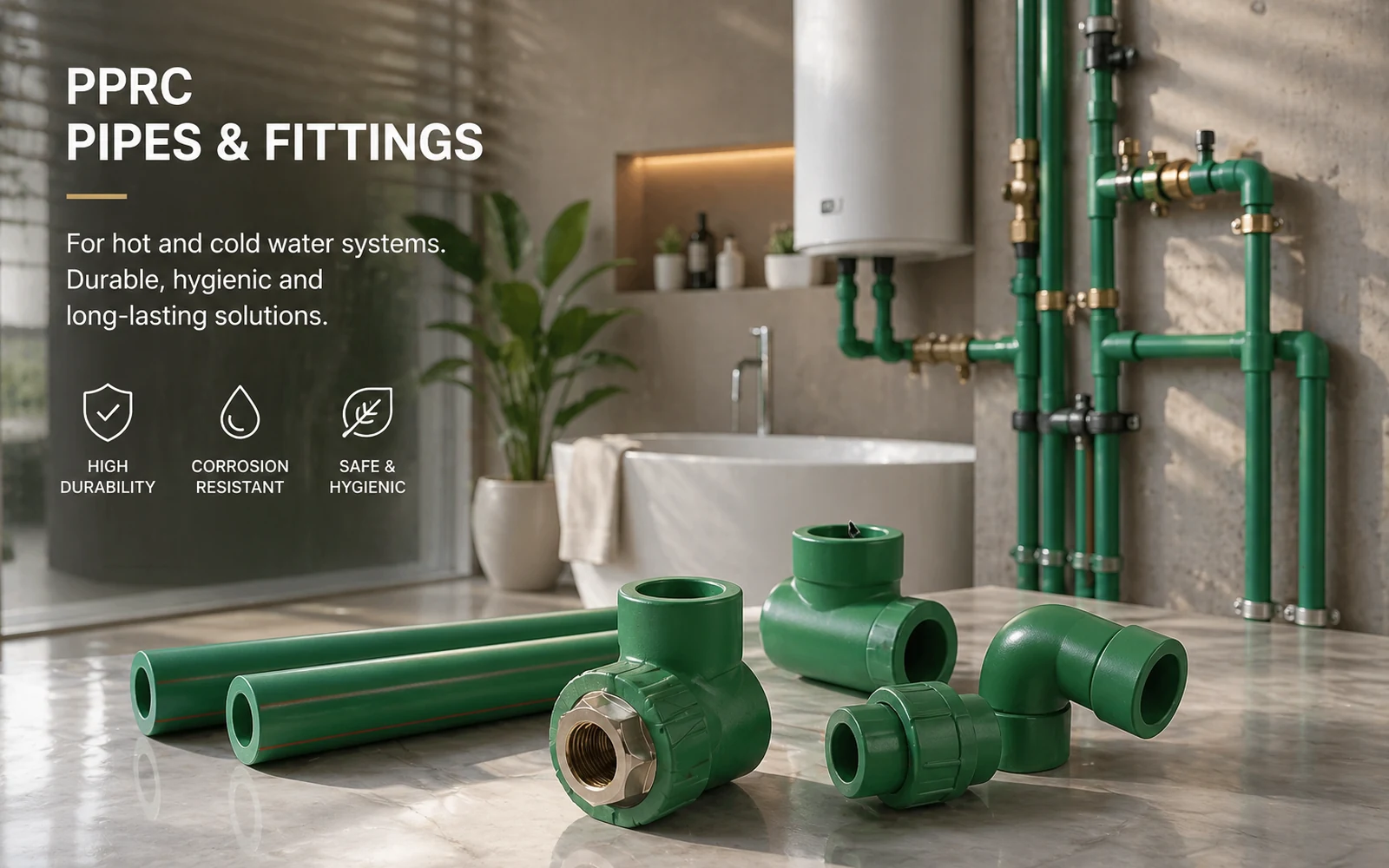
What are PPR pipes?
PPR (Polypropylene Random Copolymer) pipes play a significant role in the plastic pipe industry. They are widely used in plumbing and industrial applications and are known for their resistance to high temperatures and pressure, which makes them suitable for both residential and industrial use.
PPR pipes come in various diameters and lengths, and a range of elbows, couplings and connection elements makes installation in complex areas easier.
Benefits and advantages
Heat resistance: PPR pipes are highly heat-resistant, which makes them a good choice for hot water systems.
Durability and longevity: PPR pipes used in hot water systems are designed to last a long time, which reduces maintenance cost.
Chemical resistance: PPR-C material is chemically resistant, so it can be used in industrial plumbing.
Flow: the low friction coefficient helps water flow through the pipes.
Light weight and repairs: the light weight of PPR pipes helps during assembly and transport, and fittings make repairs and replacements quick.
Disadvantages
Low UV resistance: PPR pipes can deteriorate when exposed to UV rays, so they are not recommended for outdoor applications or areas with continuous sunlight.
Pressure and shock: they are generally not as resistant to very high pressure and physical shock, so heavy industrial environments or very high-pressure systems may call for steel or copper pipes.
Sudden temperature changes: although PPR pipes resist high temperatures, sudden temperature fluctuations can make pipes expand or contract. Allow sufficient expansion gaps when installing.
Summary
PPR pipes are a popular choice for plumbing and industrial applications thanks to their durability, flexibility and chemical resistance, and their high heat resistance makes them ideal for hot water systems. Take care in outdoor applications and in high-pressure systems. With proper installation and maintenance, PPR pipes can be a long-lasting and efficient choice.