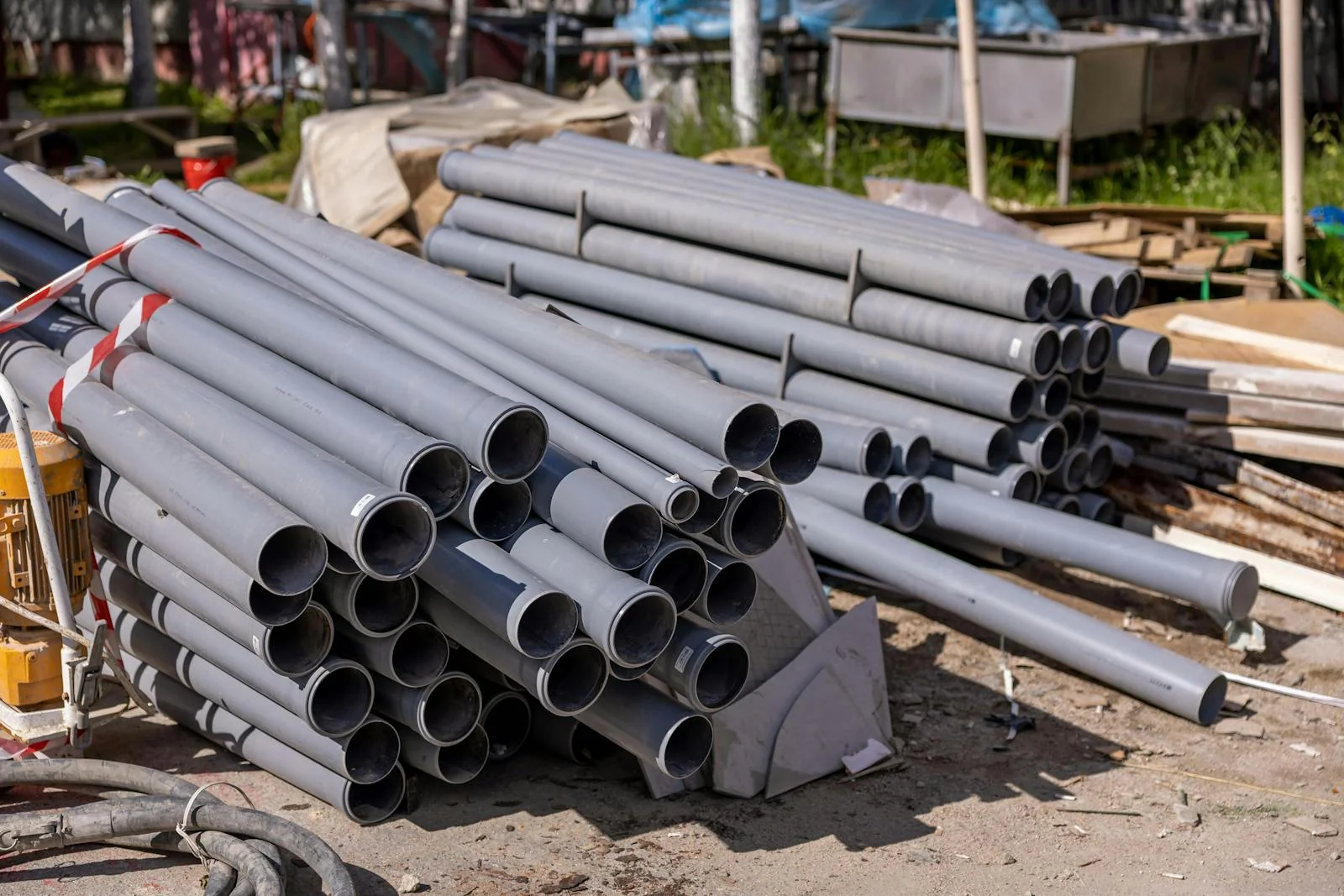
Why PVC?
PVC (uPVC) is one of the most widely preferred polymers for wastewater discharge systems. Thanks to its corrosion resistance, light weight and ease of installation, it has become the standard for residential, commercial and industrial projects.
VALA PVC products comply with the TS EN 1329-1 standard — manufactured in TYPE-1 (general wastewater) class, and offered as a complete system including sewage collectors, siphons, branches and cleanout caps.
Advantages
No corrosion: full resistance to lime, soap, detergent and mild acids — unlike metal, the inner surface stays smooth and clogging risk drops.
Light weight: up to a 70% weight advantage over metal alternatives, shortening installation time on upper floors.
Fast installation: push-fit gasket or solvent welding to join fittings — no specialised equipment required.
Acoustics: TYPE-2 thick-wall versions absorb low-frequency wastewater noise, making them a popular choice in hotel and hospital projects.
Limitations
Temperature: PVC should not be heated continuously above 60°C. Brief exposures up to 80°C — for example dishwasher discharge — are acceptable; PVC is not used for hot water lines.
Cold brittleness: impact resistance drops below 0°C. For outdoor and northern climate applications, additional insulation or an HDPE alternative should be considered.
UV exposure: extended use under direct sunlight causes colour fading and loss of mechanical properties. Painted or coated versions should be used in outdoor installations.
When to choose PVC
Indoor vertical wastewater stacks, sink and WC branches, mud siphons, roof rainwater drainage and general sewer lines — PVC is the leading price-performance choice for all of these.
PPR-C is used for hot water lines, PE-RT for underfloor heating, PB or PPR-C for potable water service.